Follow us


Parts of a Swamp Cooler
By Michael Franco
September 19, 2024
A swamp cooler — also known as an evaporative cooler — is a popular alternative to traditional air conditioning systems, particularly in dry, arid climates. It operates on a simple principle: water evaporates into the air, cooling the surrounding environment as it does so. Swamp coolers are energy-efficient and environmentally friendly, making them a preferred choice for cooling in regions with low humidity.
This May Also Interest You: What Is an Evaporative Cooler...and How Do They Work?
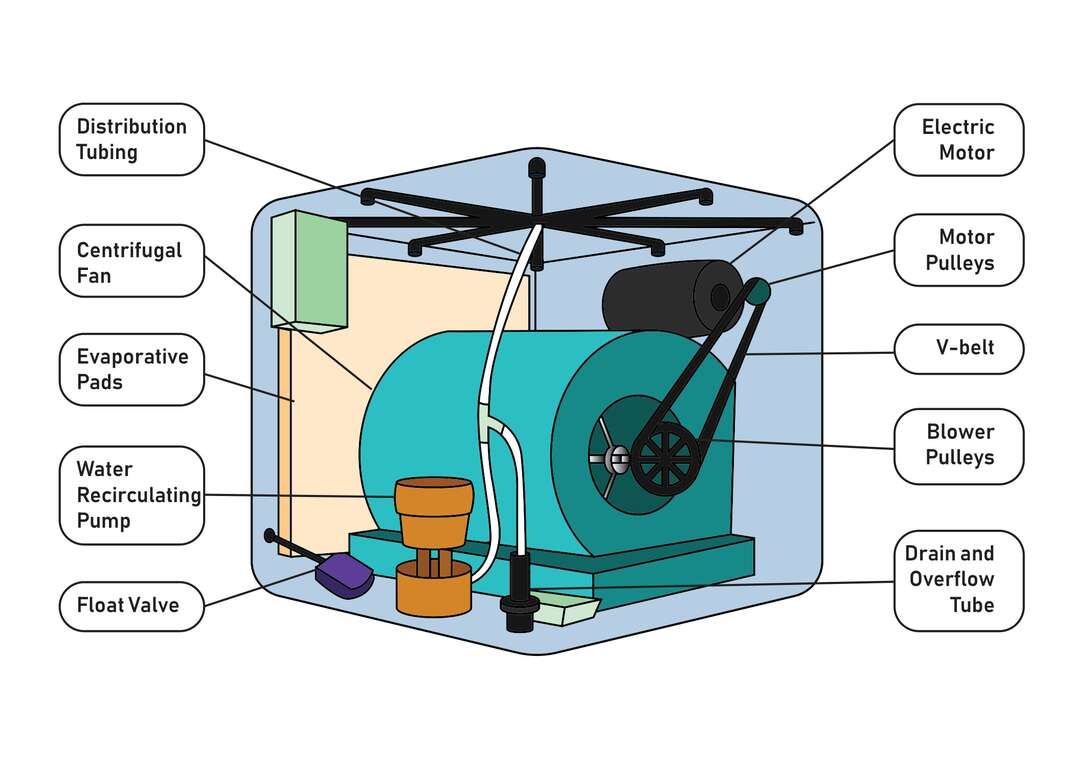
To understand how these systems work, it’s helpful to break down the various parts that make up a swamp cooler.
What Are the Inner-Workings of a Swamp Cooler?
1. Water Reservoir
At the heart of any swamp cooler is the water reservoir. This component holds the water that will be used to cool the air. Normally found at the bottom of the unit, the reservoir ensures a continuous supply of water, which is essential for the evaporative process. Water is pumped from the reservoir up to the cooler pads, where it evaporates and cools the air.
Reservoirs come in different sizes depending on the unit’s capacity. Larger coolers will have bigger reservoirs to hold more water and extend operating times between refills. Some swamp coolers can be connected directly to a water source, ensuring an automated refill process, while others must be filled manually.
2. Water Pump
The water pump is responsible for moving water from the reservoir to the cooler pads. It’s a small motorized device that continuously circulates water to ensure the pads remain wet. The pump plays a crucial role in the evaporative cooling process by keeping the water flowing and distributing it evenly across the cooler pads.
3. Cooling Pads (Evaporative Pads)
The cooling pads, also known as evaporative pads, are the critical parts where the magic of evaporation happens. These pads are made from absorbent materials like aspen fibers, cellulose or synthetic fabrics that can hold a large amount of water. The water from the reservoir is distributed over these pads by the pump, and as air passes through them, the water evaporates, cooling the air.
If you own an evaporative cooler, you'll need to purchase replacement pads every two to three years to keep your system running optimally.
4. Fan or Blower
The fan or blower is responsible for moving air through the swamp cooler and out into the room or outdoor space. The fan draws hot, dry air from the outside, pulls it through the wet cooling pads and pushes the cooled air into the building. The fan’s efficiency plays a significant role in how effectively the swamp cooler distributes cool air.
5. Motor
The motor is the powerhouse of the swamp cooler, responsible for driving both the fan and the water pump. The motor is typically an electric component that can operate at different speeds, allowing users to adjust the airflow according to their cooling needs. Some swamp coolers have variable-speed motors, while others have just one or two settings.
6. Float Valve
The float valve functions similarly to the float in a toilet tank. It regulates the water level in the swamp cooler’s reservoir by controlling the inflow of water. When the water in the reservoir reaches a certain level, the float valve shuts off the water supply to prevent overfilling.
Float valves are particularly useful in swamp coolers that are connected to a constant water supply, ensuring that the reservoir stays full without needing manual refills. They also prevent water wastage by stopping excess water from spilling out of the reservoir.
7. Air Vents (Grills or Louvers)
Air vents, also known as grills or louvers, are located at the front or sides of the swamp cooler, where cooled air is released into the environment. These vents help direct the airflow to where it's needed. Some swamp coolers have adjustable vents, allowing users to control the direction of the cooled air for more effective cooling in specific areas.
More Related Articles:
8. Drain Plug
The drain plug is a small but essential component of a swamp cooler. It’s located at the base of the water reservoir and allows the unit to be drained when necessary. Draining the cooler is important for maintenance, especially at the end of the cooling season. Leaving water in the reservoir can lead to mineral buildup, algae growth or mold, which can reduce the efficiency of the cooler or cause unpleasant odors.
9. Control Panel (Thermostat or Manual Control)
The control panel is where users interact with the swamp cooler. On basic units, this might consist of simple dials or switches that control the fan speed and pump operation. More advanced models include digital control panels with additional features like timers, thermostats and remote control capabilities.
A built-in thermostat allows the cooler to adjust its operation based on the temperature of the room, automatically turning on or off to maintain the desired temperature. This can improve energy efficiency and comfort, as the cooler won’t run constantly when it’s not needed.
10. Power Cord or Wiring
The power cord or internal wiring connects the swamp cooler to an electrical outlet or power source. Like any electrical appliance, the power supply is crucial for operating the motor, fan and pump. Swamp coolers are typically plugged into standard electrical outlets, but rooftop units may require special wiring for larger motors.
View Plans in Your Area
Follow us
Popular


Apr 01, 2024

Apr 26, 2021
Get the latest news, tips and promotional messages, including special offers.